Appearance and Identity
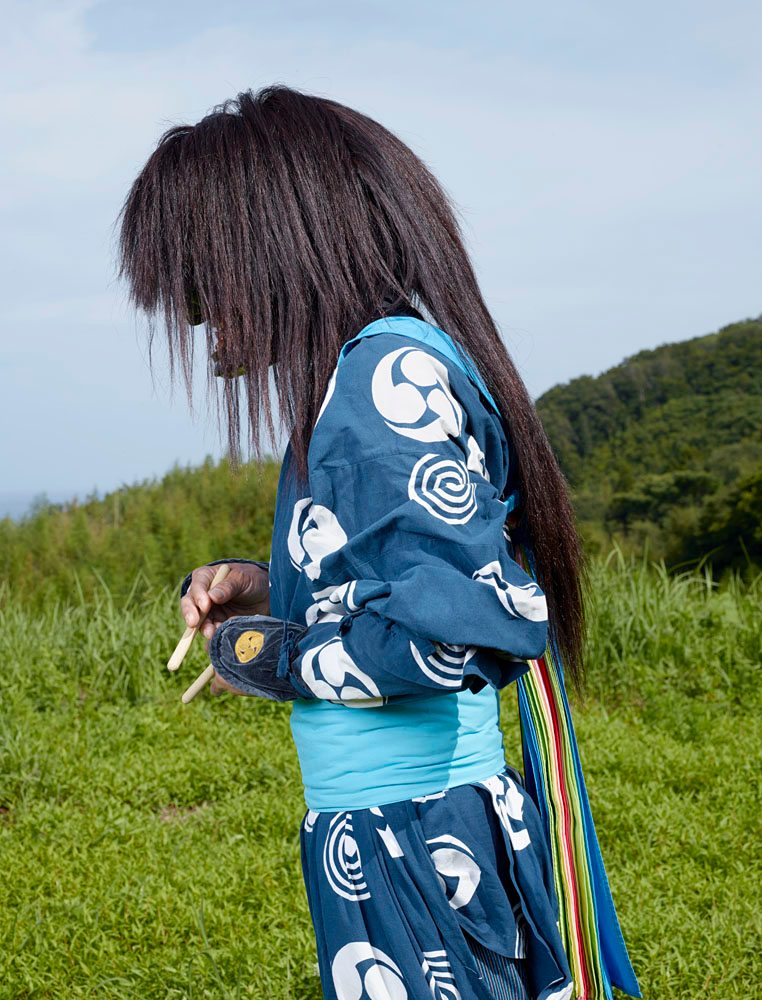
Charles Fréger’s Yokainoshima sits between ethnography and fiction, using costume and adornment as tools of transformation. By photographing Japanese ritual figures, he doesn’t simply document tradition but reimagines it. These hybrid costumes, sometimes extended with hair-like fibers, allow bodies to become vessels for invisible forces, linking communities to natural cycles and ancestral beliefs. The human figure fades into something in-between, suggesting a universal need to transform in order to access what lies beyond the visible.
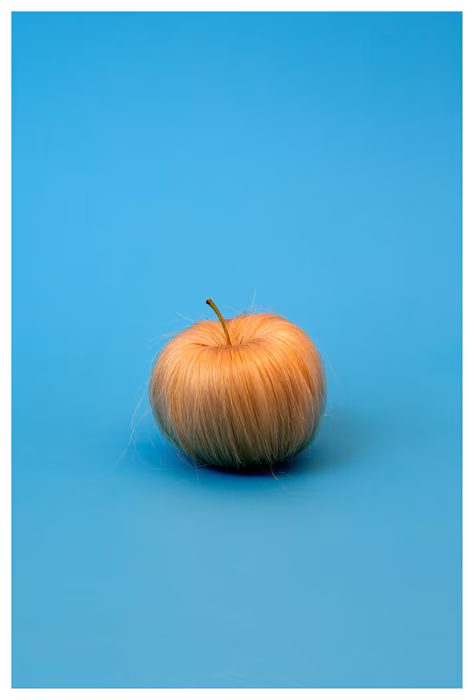
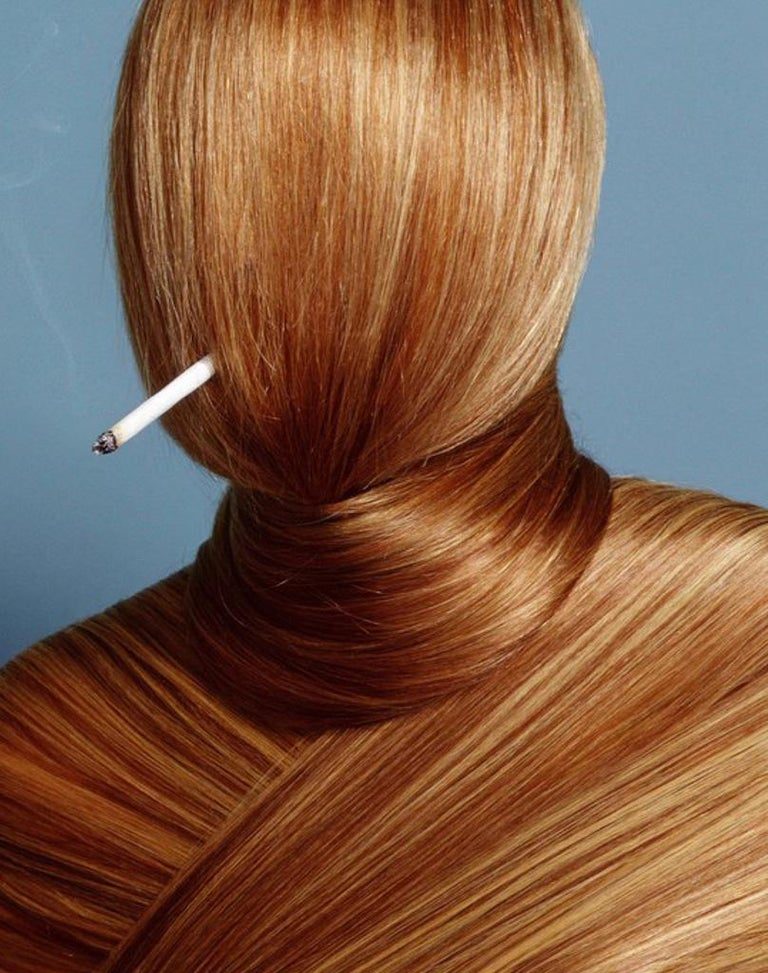
This logic of transformation continues in a more contemporary and disruptive form in Sarah Illenberger’s Hairy Apple and Hugh Kretschmer’s Untitled (Smoking Hair). Here, hair loses its sacred dimension and becomes unsettling, invading familiar objects and bodies. The effect is immediate discomfort: attraction mixed with repulsion. By distorting recognisable forms, these works expose our uneasy relationship with the body and challenge the smooth, controlled aesthetics of contemporary visual culture.
Olivier Schawalder’s Les Tricophiles pushes this further by turning hair into a collectible material. Detached from the body, it is sorted, accumulated, and archived as a trace of presence. This strange collection blurs the line between waste and relic, revealing an obsessive fascination with bodily remnants and raising questions about intimacy, memory, and material identity.
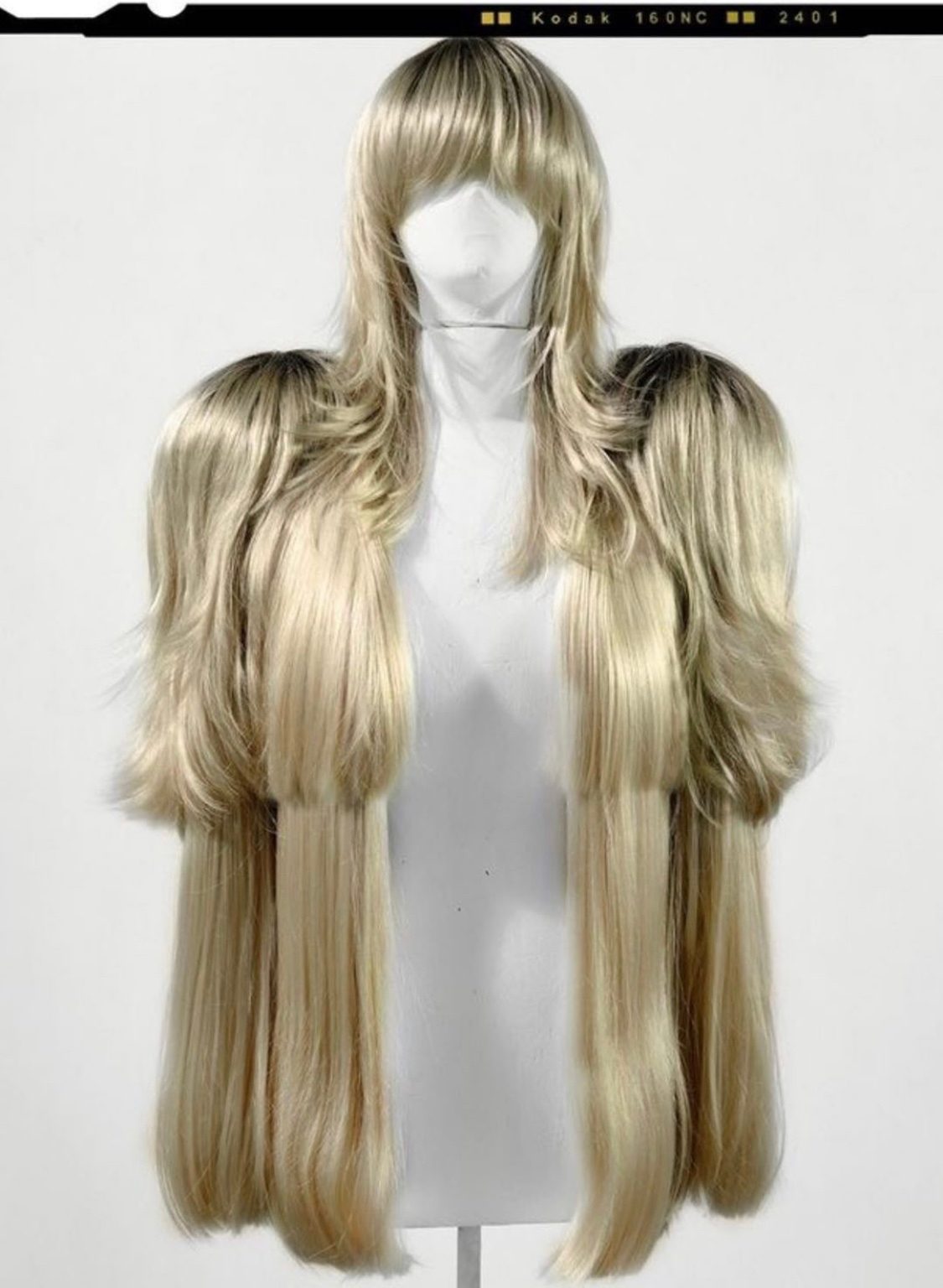
In fashion, Martin Margiela’s FW08/09 (Wigs and Hairpieces Jacket) similarly dissolves the boundary between body and garment. By integrating hair into clothing, he creates hybrid, almost organic objects. The dressed body becomes unstable, exposing identity as something constructed, layered, and artificial.
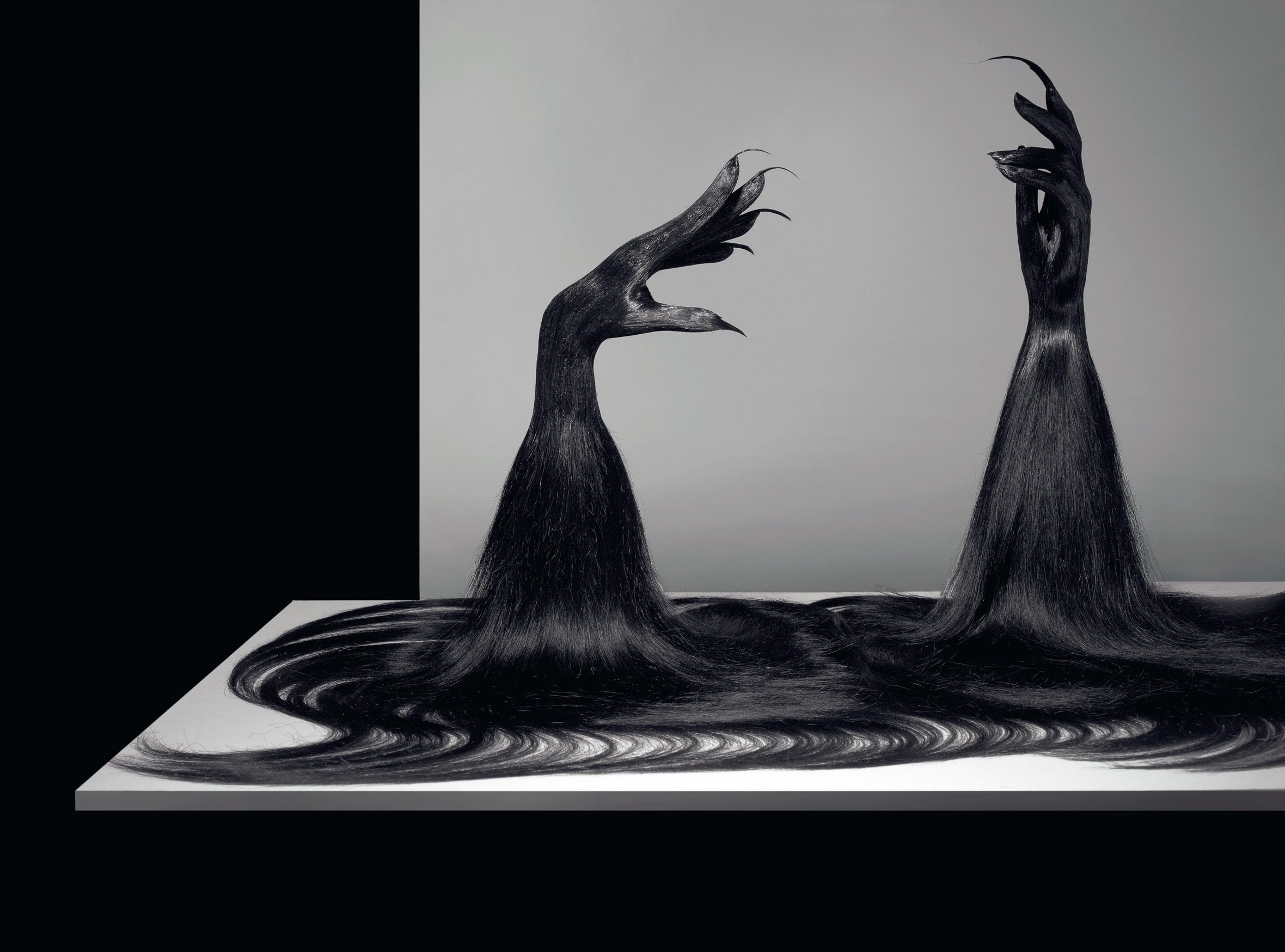
Works like Renée Rodenkirchen and Justin Rousseau’s Hairball intensify this material tension by presenting hair as dense, excessive matter—something the body expels but society represses. It becomes a sign of overflow, disrupting the boundary between inside and outside.
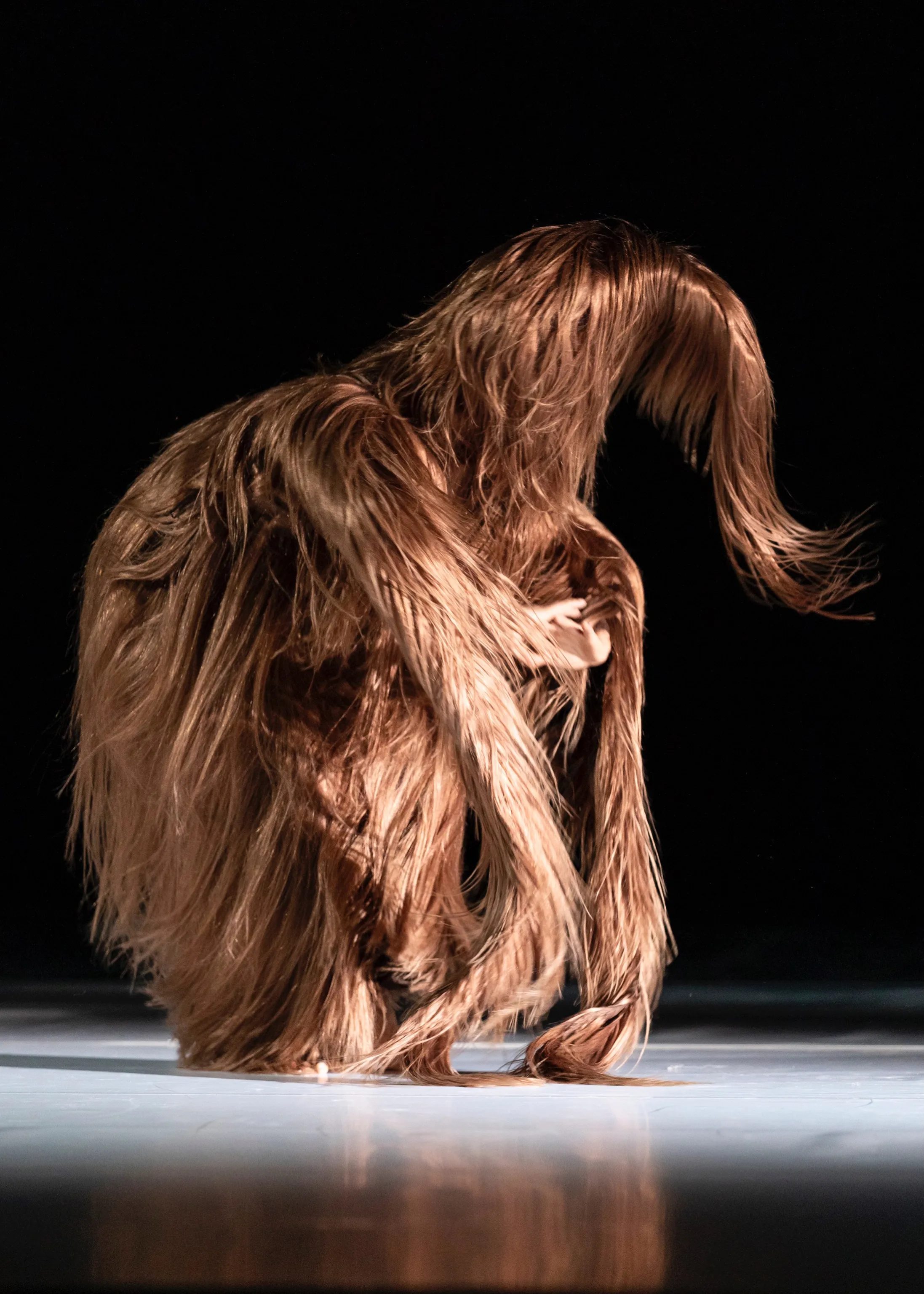
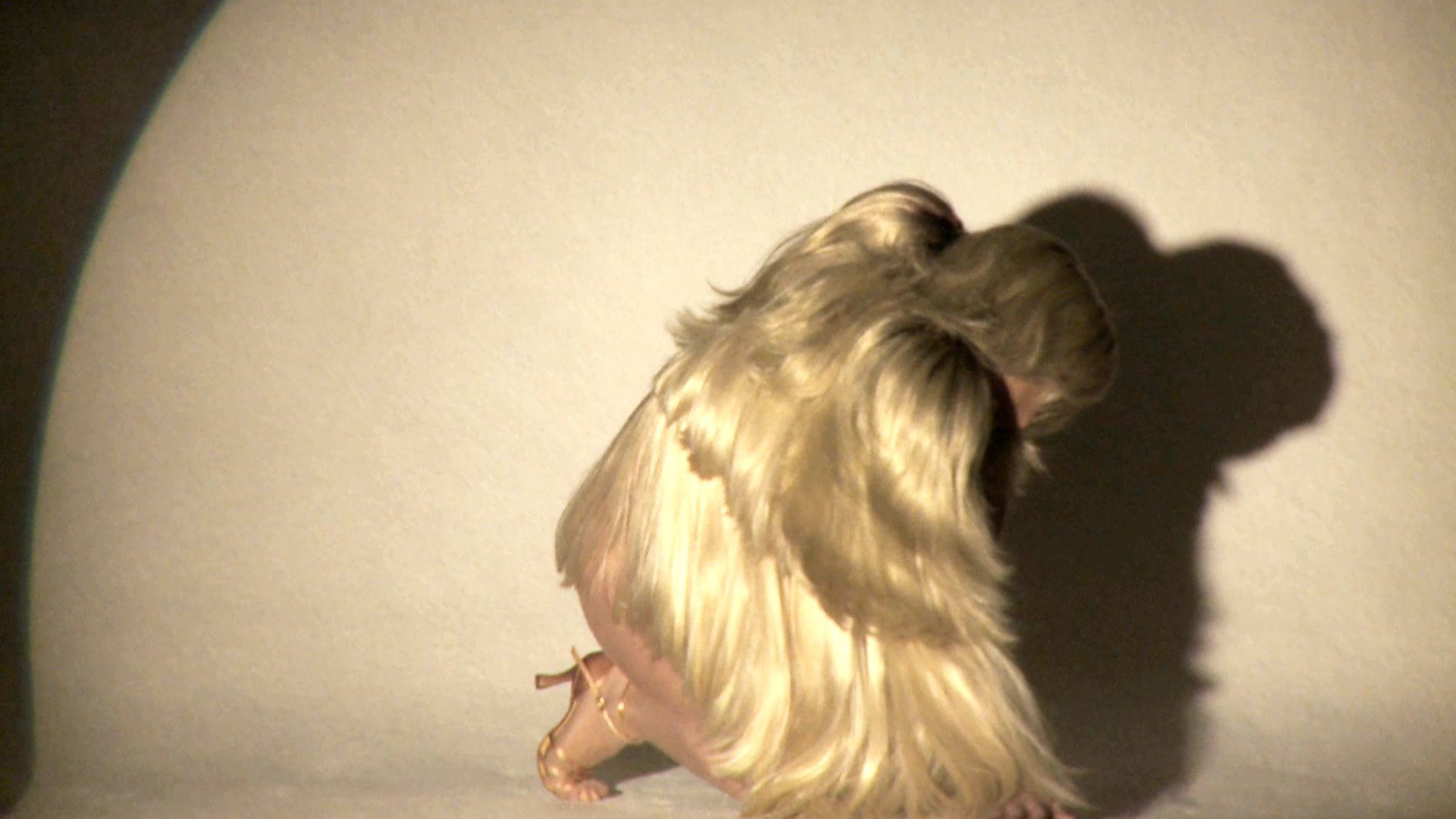
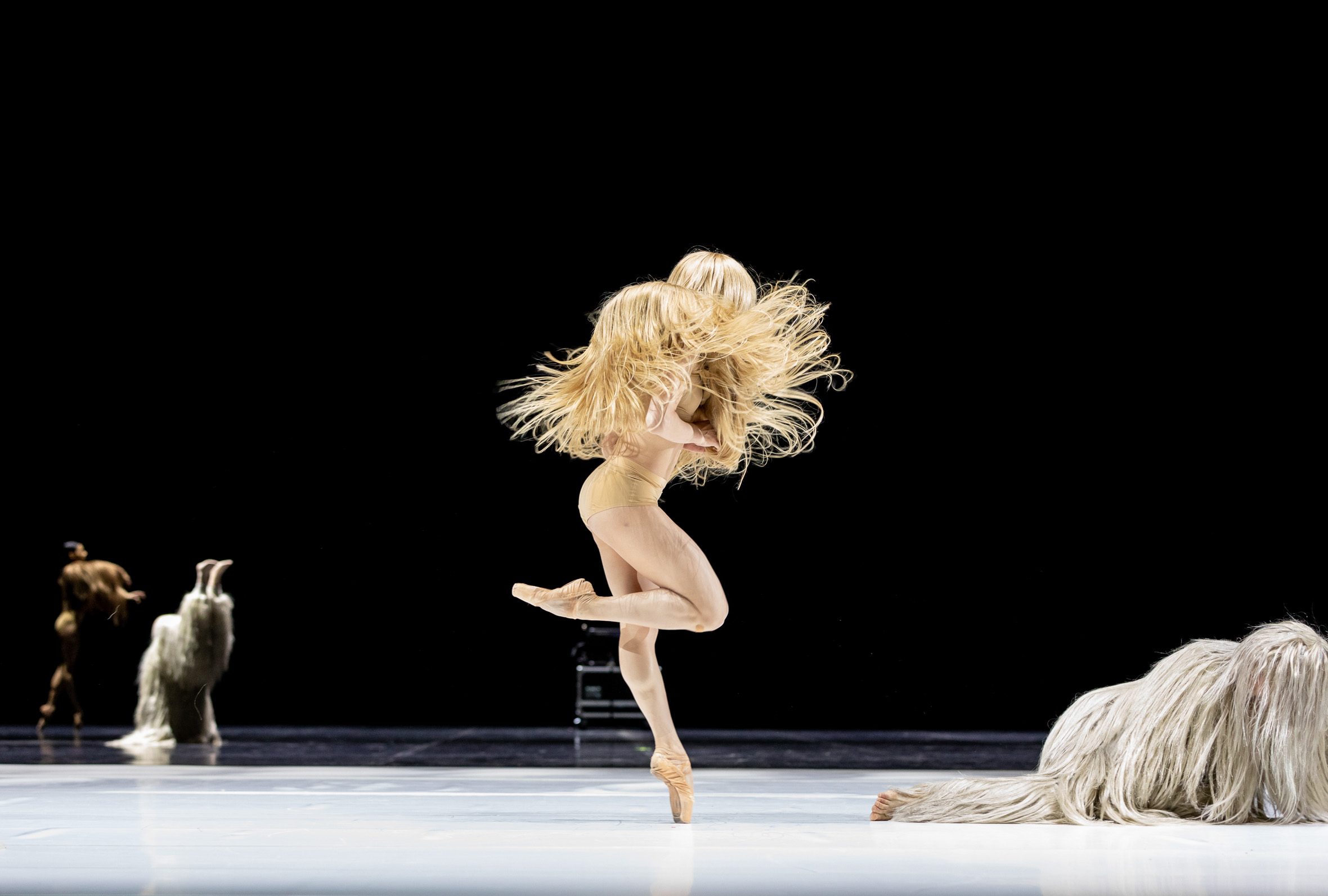
Alexander Ekman’s LIB (001) adds a performative layer, where the moving body becomes a site of control and representation. Hair, as a visible marker, participates in this staging of identity within collective structures, highlighting tensions between individuality and conformity.
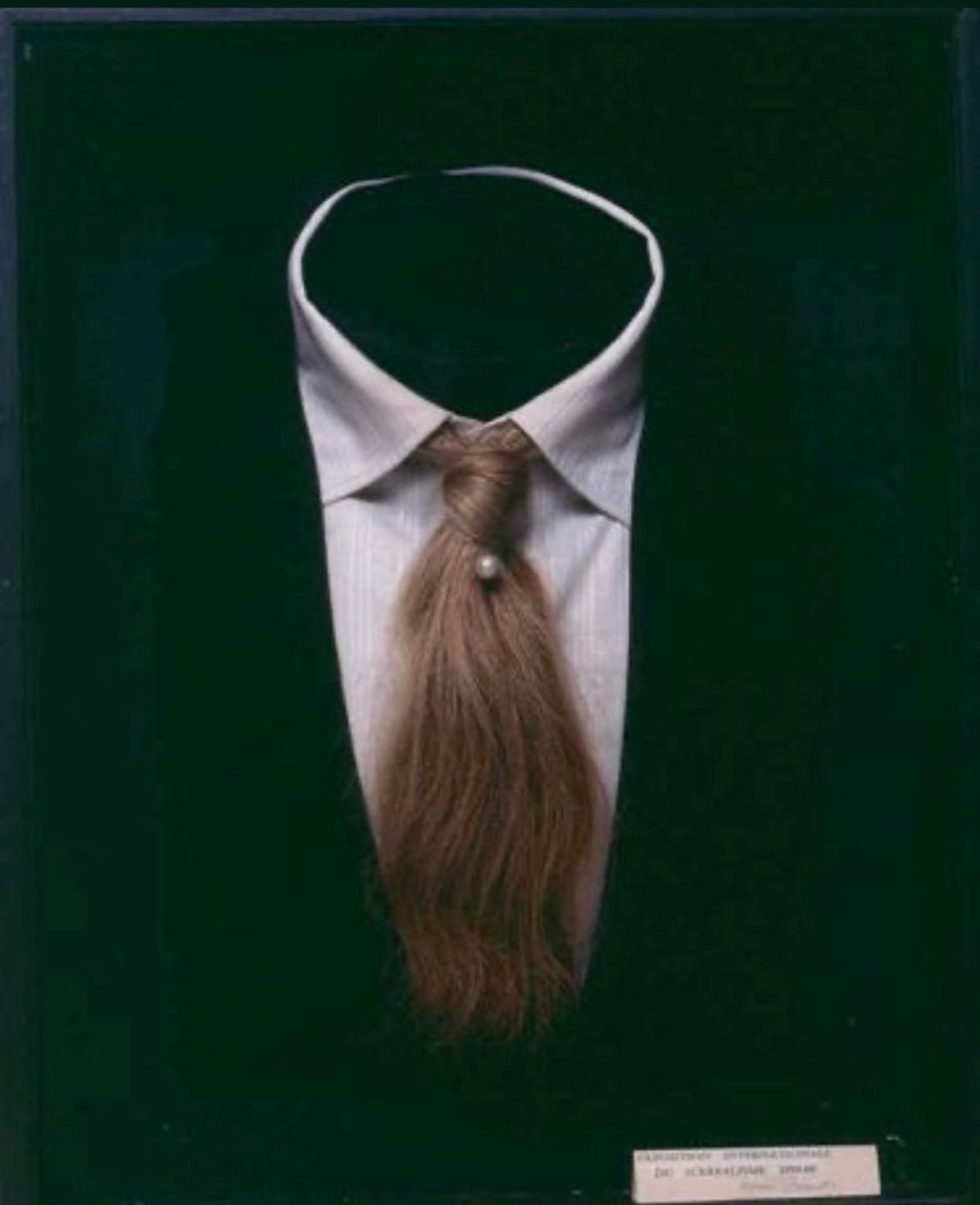
Finally, Mimi Parent’s Masculino Femenino uses hair within a surrealist critique of gender norms. Traditionally coded as feminine, it becomes a tool of ambiguity, blurring masculine and feminine identities and advocating for a fluid conception of the self.
Across all these works, hair functions as a shifting material—ritual, grotesque, intimate, or political. It becomes a way to question the body itself, revealing that even its smallest elements carry deep symbolic and cultural weight, constantly negotiating between appearance, identity, and transformation.
Yokainoshima (002)- Ph. Charles Freger.jpg
1 of 11
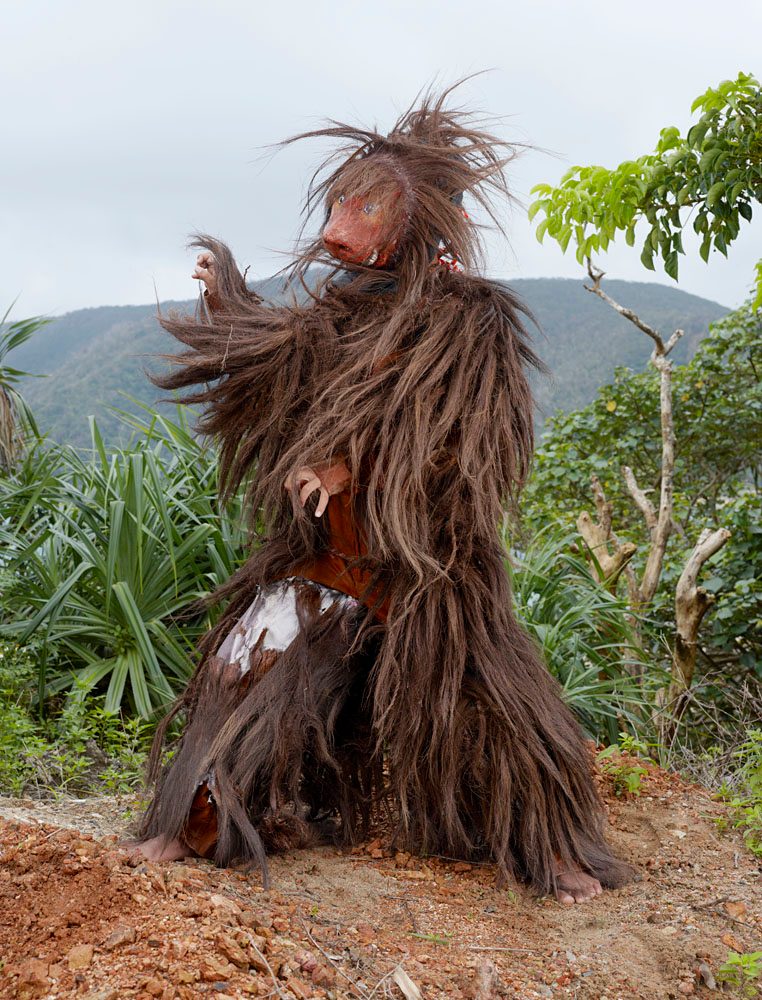
Yokainoshima (001) - Ph. Charles Freger.jpg
2 of 11
Hairy Apple- Ph. Sarah Illenberger.avif
3 of 11
Les Tricophiles - Art. Olivier Schawalder.jpg
4 of 11
FW08:09 (Wigs and Hairpieces Jacket) (002) - Martin Margiela.jpg
5 of 11
Hairball - Drt. Renée Rodenkirchen & Justin Rousseau.jpg
6 of 11

LIB (001) - Chr. Alexander Ekman.jpg
7 of 11
Sans titre (Smoking Hair) - Art. Hugh Kretschmer.jpg
8 of 11
Masculino Femenino - Mimi Parent..jpg
9 of 11
FW08:09 (Wigs and Hairpieces Jacket) (001) - Martin Margiela.jpg
10 of 11
LIB (002) - Chr. Alexander Ekman.jpg
11 of 11